Parents lose weeks of March to phone calls, paper forms, and sign-up pages that all work differently. Camps run on spreadsheets. Camps Around Town is one place to find camps, and one place for camps to run them — with the analytical and operational power Airbnb gives its hosts.
- Role
- Lead designer & front-end developer
- Platform
- Web app · parents and camp directors
- Status
- In staging · general availability in 2027
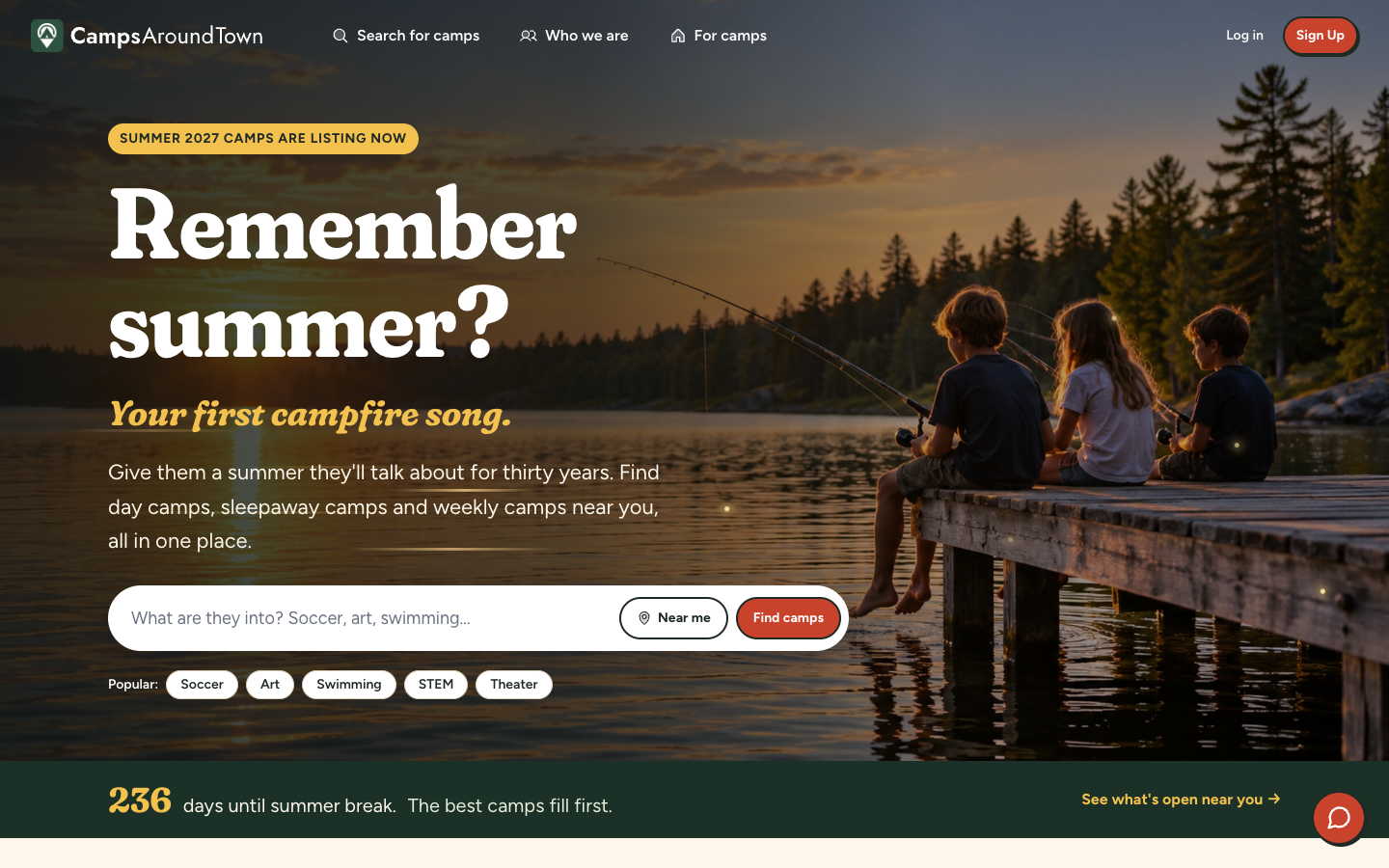
Every March, the same routine: call other parents, compare weeks, chase forms — all before the good sessions fill.
The founders started from their own frustration as parents. My job was to turn that into a product that serves both sides of the market.
- Parents
- Camps are scattered across individual sites, each with its own sign-up and its own paperwork. What families actually decide on — dates, ages, distance, and whether their kids’ friends are going — is hard to see anywhere.
- Camps
- Most are small operations with a brochure site at best. They have no easy way to publish sessions, take registrations, or see how many parents looked at them.
Search the way parents think: not by category taxonomy, but by the kid in front of them.
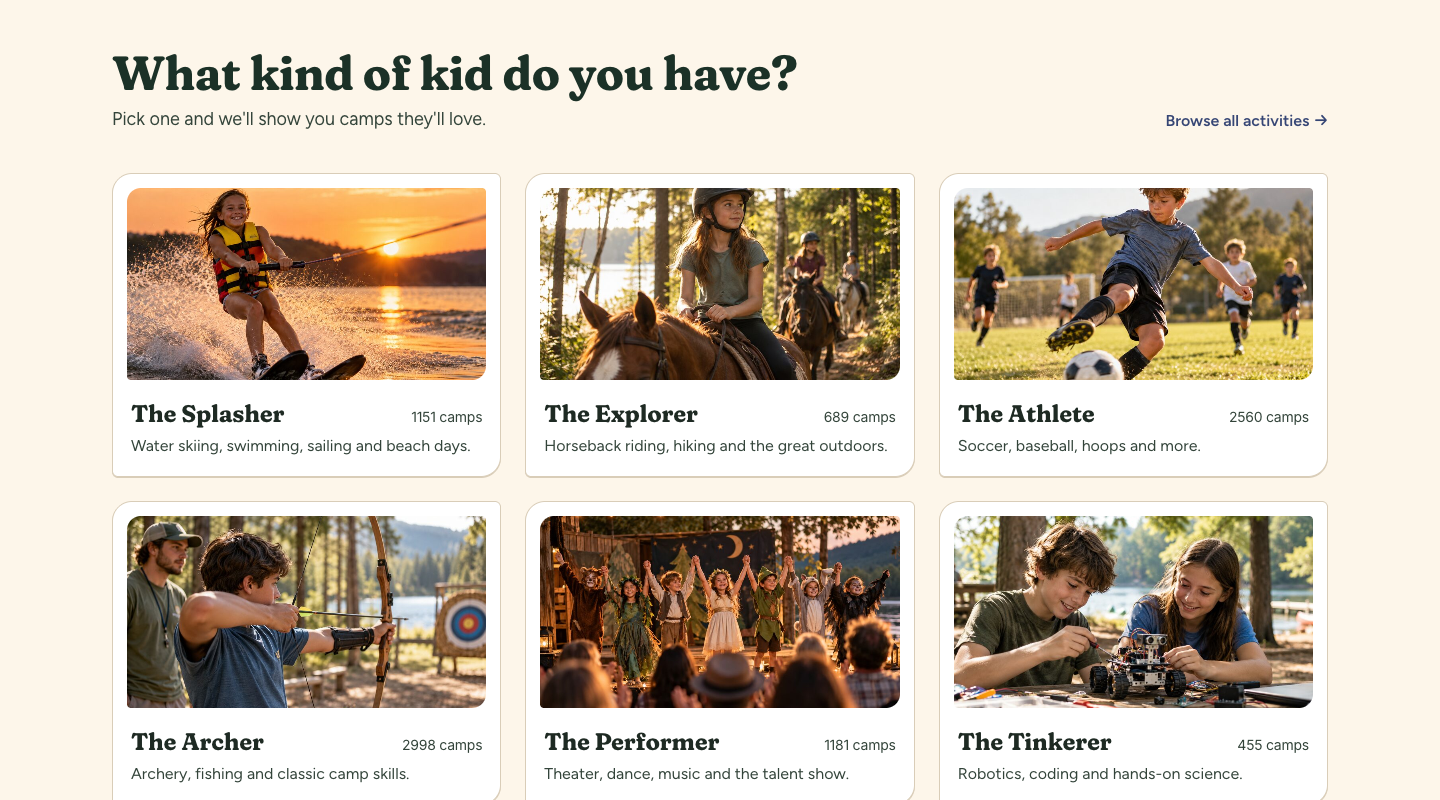
The home page opens on a feeling — “Remember summer?” — and a single search box. Beneath it, six camper archetypes (the Splasher, the Explorer, the Athlete, the Archer, the Performer, the Tinkerer) turn a taxonomy of thousands of activities into one decision: what kind of kid do you have?
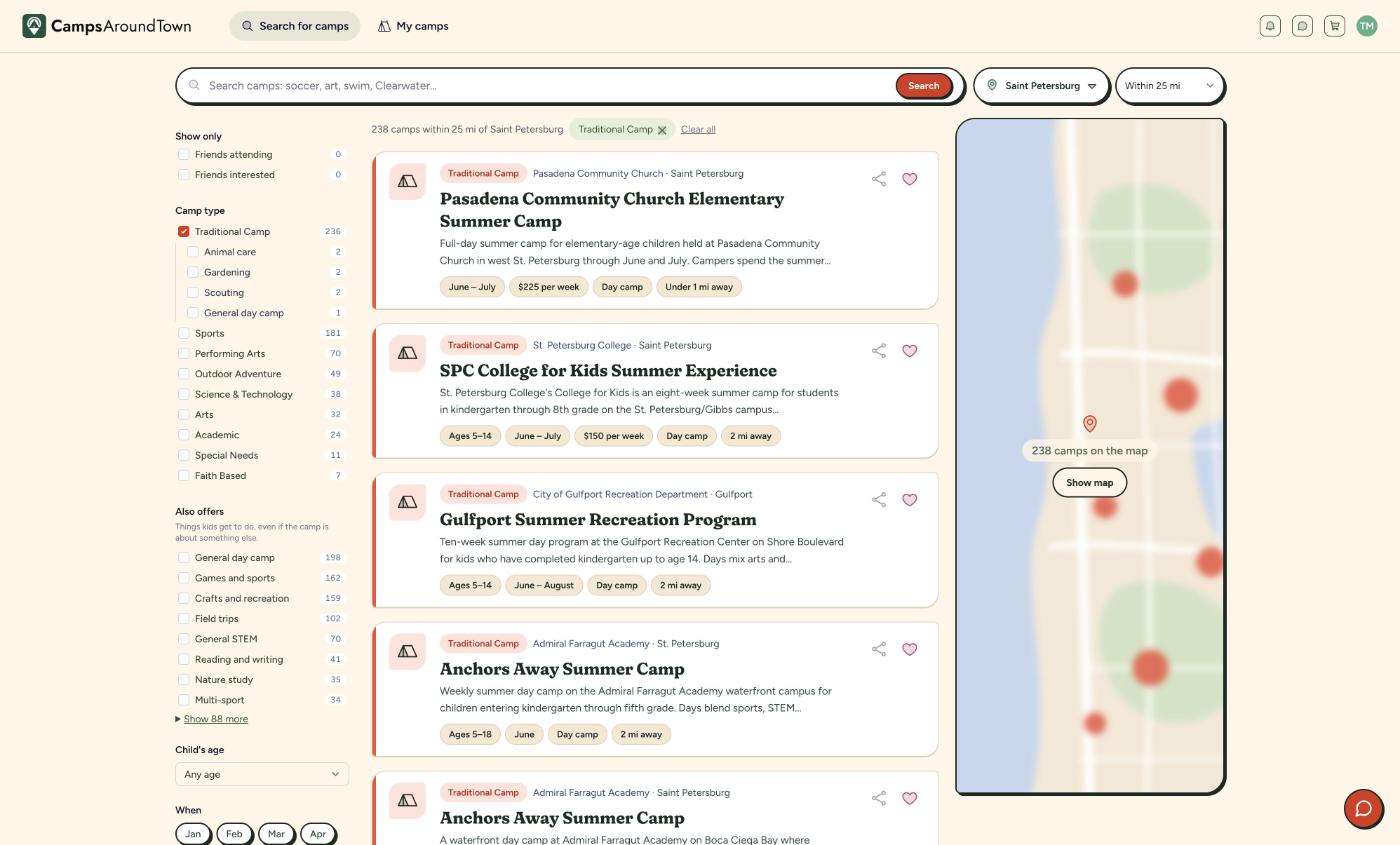
Results are filterable by activity, with live counts, and sit beside a map. Camps that take registration on the platform are flagged, and a camp’s page shows sessions, dates, price, and contact details in one place, with the option to see whether kids you know are going.
A listing is only the front door. Camps also get the tools to run the business.
Directors find their camp, claim it free, then add sessions, photos, and dates — and see how many parents looked. Camps can take registration directly on the platform or point families to their own site.
The goal was the same leverage Airbnb gives hosts: a single dashboard for the listing, the calendar, the guests, and the numbers behind them.
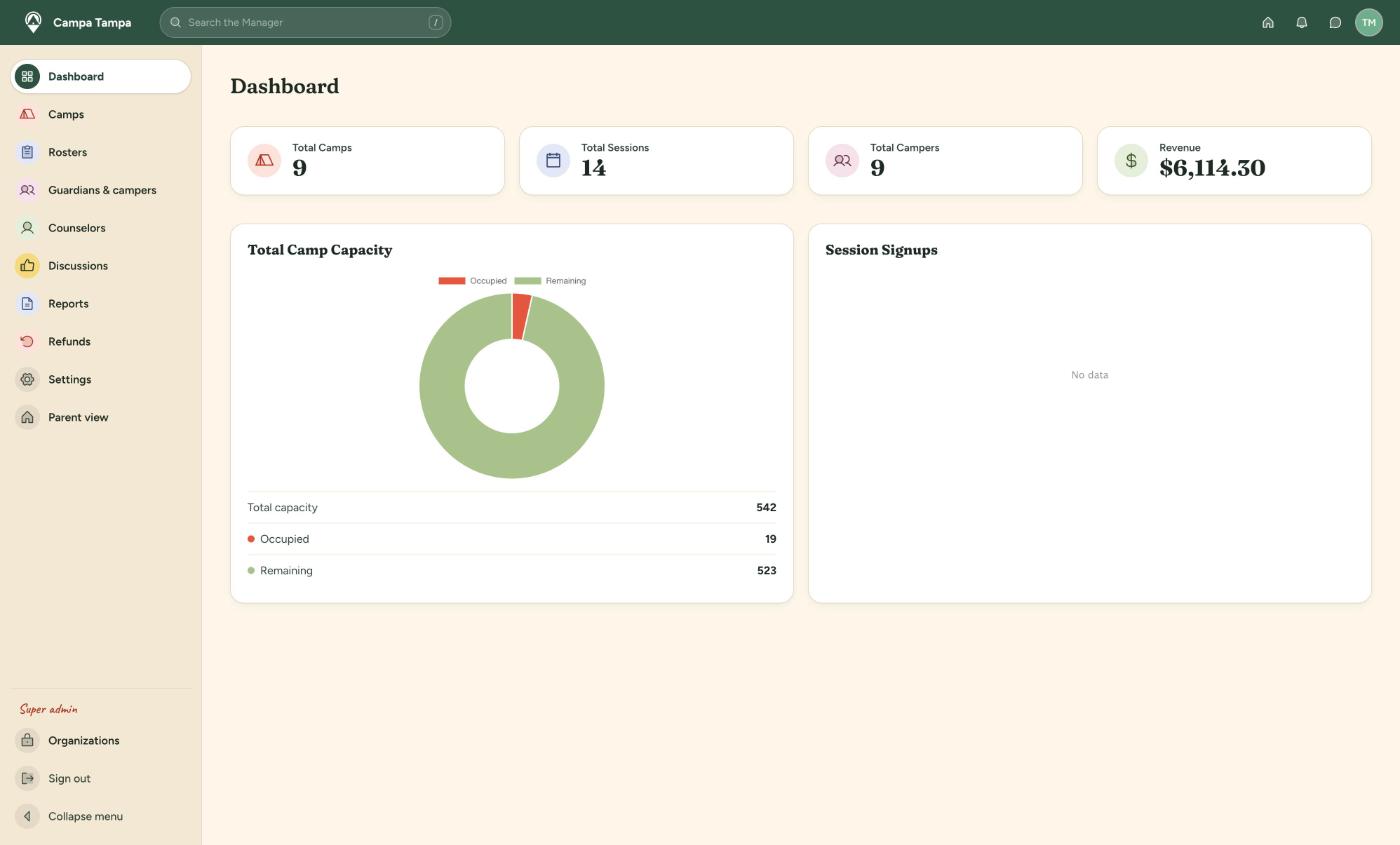
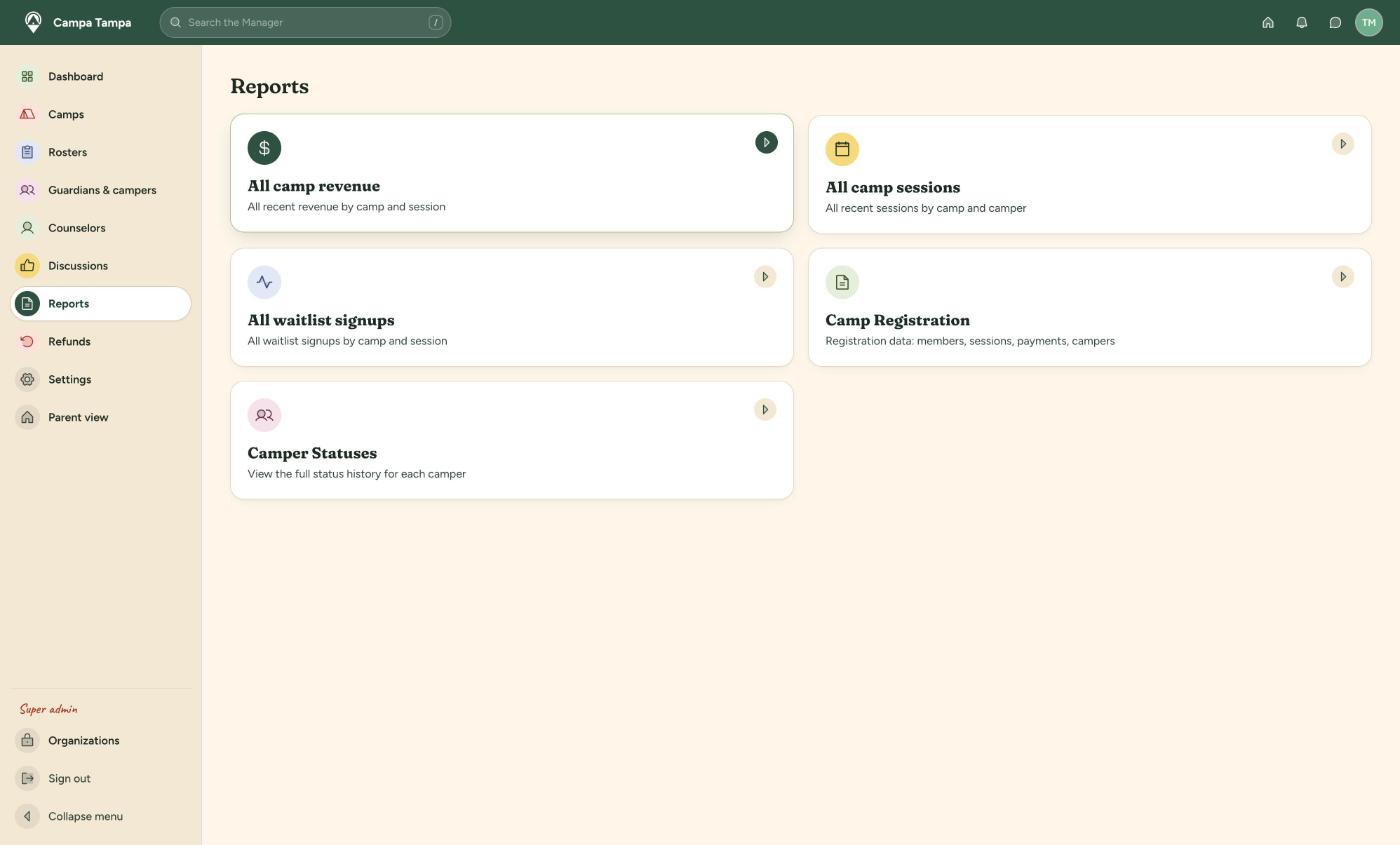
The manager is its own workspace: a dashboard for camps, sessions, campers, revenue, and live capacity, plus rosters, guardians and campers, counselors, discussions, refunds, and reports on revenue, sessions, waitlists, registration, and camper status history.
I led design end to end — research, information architecture, visual language, and the interaction model for both the parent and camp-director sides — and built the front end myself, so what shipped is what I designed.
We started with a single trial at a local camp, testing features and functionality with real camp admins and campers so we could optimize the platform’s value ahead of general availability in 2027.
The directory is seeded with thousands of camps across the six archetypes and is in staging ahead of the Summer 2027 season. A public link will be added at launch.